Minutes of runtime, and the three surfaces they are spent on · review
AIPER Scuba S1 review
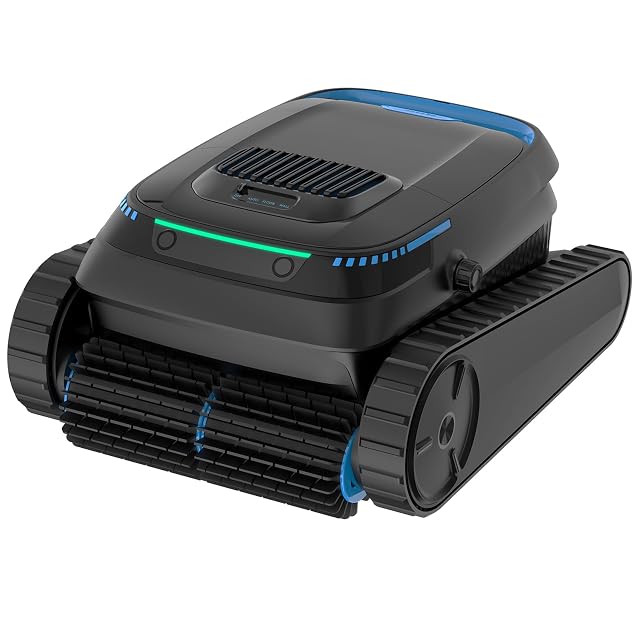
A three-zone robot with eleven sensors and a published path algorithm, a dual-layer filter whose 3 µm element is included rather than optional, and five cleaning modes with over-the-air updates.
The bottom line The navigation and the filter are both a step up, and both are published in enough detail to be believed. Eleven sensors with a named pattern is what separates systematic coverage from a machine wandering until the battery runs down, and including the 3 µm element rather than selling it is the right decision. The gap is retrieval: nothing in the listing says how a robot this size gets out of a three-metre pool.
On the maker’s own page
A cordless robot for floor, walls, waterline and flat areas from 30 cm of
depth, for in-ground and above-ground pools. Eco mode gives 240 to 270 minutes;
auto, floor, wall and schedule modes give up to 180.
Navigation uses eleven sensors with dual-path algorithms and a pattern the
maker names WavePath, described as systematic coverage with minimal overlap,
with adaptive navigation. The filter is dual-layer: a 180 µm standard element
with a replaceable 3 µm ultra-fine filter. A tracked drive provides climbing.
Control is by app, with five modes and over-the-air updates.
Two runtimes, which is the honest way to publish one
Eco for daily upkeep, everything else for work. The 180-minute figure is what
applies when the robot is climbing walls and holding the waterline, which is
what the machine was bought for.
A single headline runtime on a robot with modes is a figure taken in the mode
that flatters it. Two figures with their modes named is a listing that can be
read.
The filter that is not an accessory
180 µm catches leaves and sand; 3 µm catches what makes water look cloudy. On
this shelf the fine element is frequently sold separately, and here it is part
of the system.
That is a real difference in what the price includes, and it is the kind of
thing that only shows up when two listings are read side by side.
The question left hanging
Retrieval. Four robots in this family publish a parking routine — at the edge,
at the waterline, with or without a hook. This one describes what it climbs and
says nothing about how it comes out.
On a pool three metres deep, that is not a detail.
Availability
The German Amazon store sat at roughly 494 € at the single check this page is built on.
The American, British, French, Italian and Spanish Amazon stores gave back nothing, so the buy button there lands on a search instead of a blank page.
These figures are what Keepa gave back the day this page was last written. Stock and prices shift without warning.
Prices quoted in this text were read on 21 September 2026. The live price is at the top of the page.
Declared figures, and the gaps between them
Strengths
The 3 µm ultra-fine filter is part of the dual-layer system rather than an accessory
Eleven sensors and a named path algorithm, which is the most detailed navigation description on this shelf
Two runtime figures published for two different modes, rather than one headline figure
Over-the-air updates and five cleaning modes
Compromises
No retrieval routine published — the one thing the machines either side of it both address
Neither charge time nor weight is published
Whether the battery can be replaced is not published
Specifications
Runtime
Up to 240–270 minutes in eco mode; up to 180 minutes in auto, floor, wall or schedule modes
Surfaces
Floor, walls, waterline and flat areas from 30 cm of depth, for in-ground and above-ground pools
Filter fineness
Dual layer — 180 µm standard filter with a replaceable 3 µm ultra-fine filter
Navigation
11 sensors with dual-path algorithms and a WavePath cleaning pattern; adaptive navigation stated
Charge time
Not published
Weight
Not published
Retrieval
Not published as a parking routine — tracked drive stated for climbing
Amazon reference
B0DL46SD6W (one reference across 1 Amazon marketplace)
EAN
6926417205835
The questions this one raises
Why are two runtimes published?
Because they belong to different modes. Eco gives 240 to 270 minutes for daily upkeep; auto, floor, wall and schedule give up to 180. Publishing both is more honest than a single headline, and the 180 is the figure that matters when the robot is actually climbing.
What is the 3 µm filter for?
Fine dust, sand and algae — particles a 180 µm mesh passes straight through. AIPER includes it as part of a dual-layer system rather than selling it separately, which is the difference between this machine and the one beside it on this shelf.
How does it come out of the water?
The listing does not say. It describes a tracked drive and its climbing ability but publishes no parking routine, which is the one retrieval question a cordless robot raises and which four other robots in this family answer explicitly.
Who this one is for
A shaped pool where systematic coverage is worth more than raw suction
Price and availability
Details checked on September 21, 2026.
Sources
Specifications: manufacturer sheet and Amazon product page. Prices and availability: Keepa. No product on this site has been physically tested.
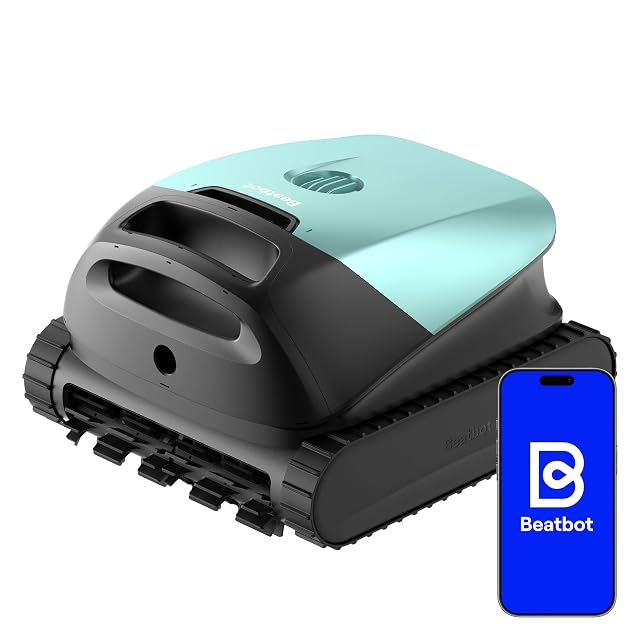
Floor, wall, waterline; 5 h floor; 25 700 LPH; 5 l
A three-zone robot that brushes the waterline for eight seconds at a time, publishes 25 700 LPH of suction and a 5-litre basket, and parks itself at the waterline for ten minutes so it can be lifted out without fishing.
Best for: A pool with a visible waterline mark and enough surface to justify the runtime
Floor, wall, waterline; 2 h; 18 927 LPH; IP68 to 3 m
A three-zone tracked robot that publishes what it climbs in degrees and centimetres — 30° slopes and 3 cm obstacles — with IP68 to a stated three metres and a 4-litre basket.
Best for: A pool with steps, a drain cover or a change of level that defeats a simpler machine
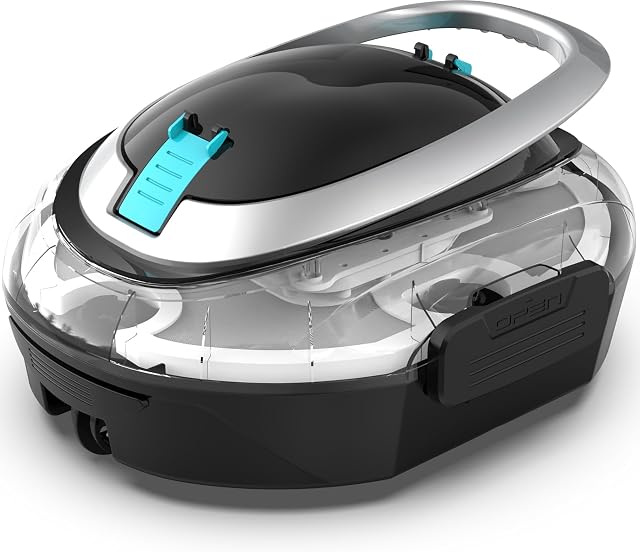
A floor robot with a two-stage filter — a 180 µm mesh backed by a 40 PPI foam — a transparent housing so the basket can be read without opening it, and a published weight of 3 kg.
Best for: A pool under trees, where the second filter stage and the visible basket both earn their place