Minutes of runtime, and the three surfaces they are spent on · review
MOVA Rover X10 review
The most heavily equipped robot on this shelf: a laser distance sensor building a 3D map underwater, four turbine motors, six hours of runtime from a 15 000 mAh battery, and a two-layer 5-litre filter.
The bottom line Everything this shelf can do, in one machine, and one question left hanging. Laser mapping, four turbines, six hours and both filter layers is a genuinely different proposition from the robots beneath it — and on a machine at this price, the two things nobody publishes are how it comes out of the pool and what happens when the battery stops holding charge. Both belong in the listing.
On the maker’s own page
A robot the maker calls 7-in-1, handling steps, flat areas and the rest under
AI-guided control. A FloatDrive system with four turbine motors and intelligent
differential steering provides movement and stability on steps and uneven
ground.
Navigation is AquaScan 360°, using an underwater laser distance sensor to build
a real-time 3D map, with intelligent route planning to cover every curve and
corner. An EdgeDrive brush follows edges and corners, with an independently
driven front brush and a no-backflow flow channel.
The battery is 15 000 mAh, giving up to six hours per charge. The 5-litre
container holds a 180 µm filter and a 3 µm ultra-fine filter, both replaceable.
Mapping, which is a different claim
Every other robot in this family publishes sensors, patterns or algorithms —
things that react. This one publishes a map.
A laser distance sensor building a 3D model underwater and planning a route
from it is the difference between covering a pool and traversing it until the
battery runs down. It is the maker’s description of their own system, and it is
unique on this shelf.
Six hours, read against a pool
The longest runtime here by a wide margin, and useful in exactly one case: a
pool big enough or shaped enough that a shorter machine does not finish.
On a 30 m² rectangle it is five hours of battery nobody uses — bought, carried
and eventually worn out without ever being needed. Runtime is only ever
readable against the pool it is pointed at.
The two silences
How it comes out of the water, and what happens when the pack stops holding
charge.
The first is published by four robots in this family and not by this one. The
second is published by none of the nine, and on a machine where the battery is
a large share of the price, it is the figure that decides whether this is a
purchase or a subscription.
Availability
The German, Italian and Spanish Amazon stores sat at roughly 999 € at the single check this page is built on.
The American, British and French Amazon catalogues hold the reference with no seller standing behind it.
These figures are what Keepa gave back the day this page was last written. Stock and prices shift without warning.
Prices quoted in this text were read on 21 September 2026. The live price is at the top of the page.
Declared figures, and the gaps between them
Strengths
Underwater laser mapping with real-time route planning — the only mapped navigation in this family
Six hours from a 15 000 mAh battery, nearly double the next longest here
Both filter layers included and both replaceable — 180 µm and 3 µm
A dedicated edge brush with an independently driven front roller
Compromises
No retrieval routine published, on the heaviest-specified machine here
No charge time published, against a six-hour runtime and a 15 000 mAh pack
Whether the battery can be replaced is not published — and on this machine it is the whole purchase
Specifications
Runtime
Up to 6 hours from a 15 000 mAh battery
Surfaces
Stated 7-in-1 coverage including steps and flat areas; edges and corners followed by a dedicated brush
Filter fineness
Two layers in a 5 l container — 180 µm filter and a 3 µm ultra-fine filter, both replaceable
Navigation
AquaScan 360° with an underwater laser distance sensor building a real-time 3D map, and intelligent route planning
Charge time
Not published
Weight
Not published
Retrieval
Not published as a parking routine
Amazon reference
B0GLP9L4PY (one reference across 6 Amazon marketplaces)
EAN
6979287180115
The questions this one raises
What does underwater laser mapping do that sensors do not?
The maker states that AquaScan builds a real-time 3D map and plans routes from it, rather than reacting to obstacles as they are met. That is a different kind of navigation from the sensor counts published elsewhere in this family, and it is the only mapped system here.
Is six hours useful?
On a pool the robot covers in one, it is five hours of battery bought and never used. On a large or shaped pool with steps, it is what lets a single cycle finish. The runtime is only readable against the pool, which is why this page prints it next to what the machine is for.
What happens when the battery ends?
Nobody in this family says. A 15 000 mAh pack charged and discharged through a season has a finite life, and on this machine the battery is a large share of the price. The absence is recorded on every page here rather than filled in.
Who this one is for
A large or complicated pool where mapped coverage genuinely saves passes
Price and availability
A reference exists on these Amazon stores: France, Germany, Italy, Spain, United Kingdom, United States. Listed is not the same as in stock — availability changes daily.
Details checked on September 21, 2026.
Sources
Specifications: manufacturer sheet and Amazon product page. Prices and availability: Keepa. No product on this site has been physically tested.
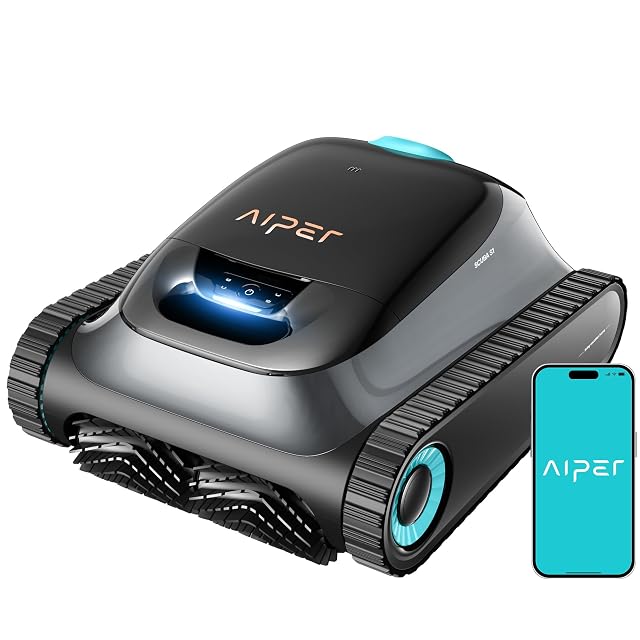
Floor, wall, waterline; 270 min eco; 11 sensors; 3 µm included
A three-zone robot with eleven sensors and a published path algorithm, a dual-layer filter whose 3 µm element is included rather than optional, and five cleaning modes with over-the-air updates.
Best for: A shaped pool where systematic coverage is worth more than raw suction
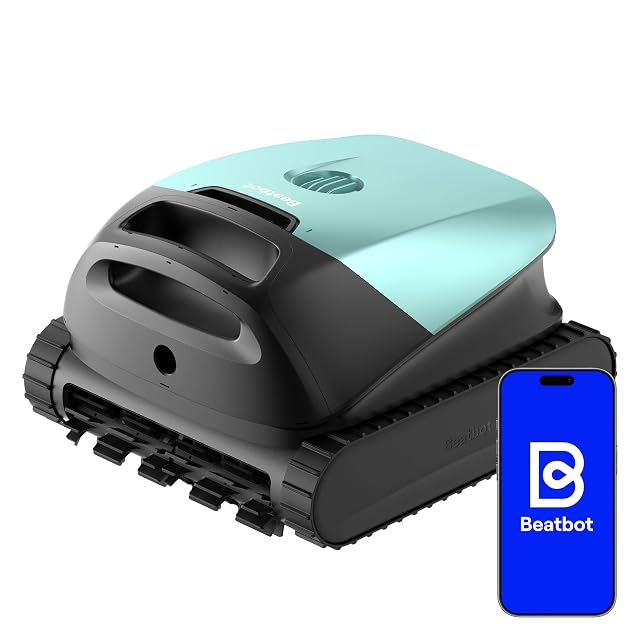
Floor, wall, waterline; 5 h floor; 25 700 LPH; 5 l
A three-zone robot that brushes the waterline for eight seconds at a time, publishes 25 700 LPH of suction and a 5-litre basket, and parks itself at the waterline for ten minutes so it can be lifted out without fishing.
Best for: A pool with a visible waterline mark and enough surface to justify the runtime
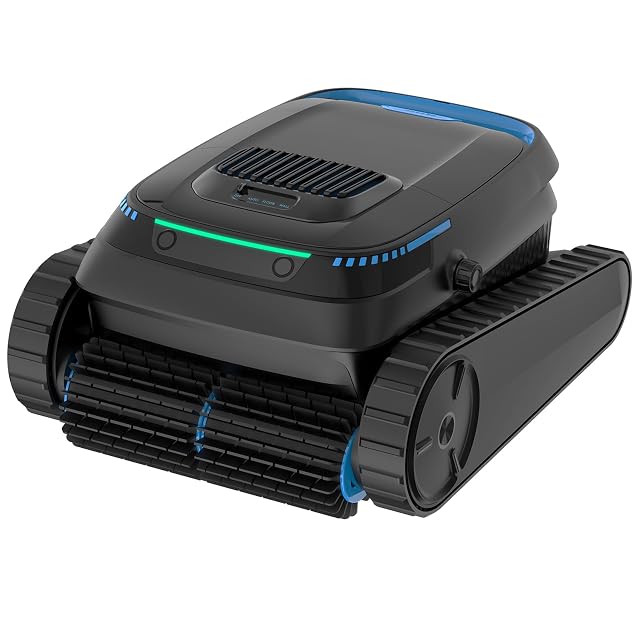
Floor, wall, waterline; 2 h; 18 927 LPH; IP68 to 3 m
A three-zone tracked robot that publishes what it climbs in degrees and centimetres — 30° slopes and 3 cm obstacles — with IP68 to a stated three metres and a 4-litre basket.
Best for: A pool with steps, a drain cover or a change of level that defeats a simpler machine